



EMEA Markets - Latest Developments
CABSAT 2012, is bringing together the most dynamic – and lucrative – broadcast markets in the world. According to the latest research by Informa Telecoms and Media, there are 80 million television households in the Middle East and North Africa market. Today satellite television reaches 65% of them, but by 2016 that proportion will rocket to 80%.
The telecoms industry is currently involved in a massive transformation. Since the arrival of the internet, the focus of the industry has moved from providing defined end-products to becoming a facilitator in the development of a range of new products, companies, and indeed new industries, according to a new report by Research and Markets.
Television might well be the world’s most universal technology. Almost the entire surface of the planet now has TV signal coverage, with television sets in over 1.4 billion households worldwide, representing 98% of dwellings in developed countries and nearly 73% in the developing world.
High Throughput Satellites (HTS) will increasingly be a key addition to the offshore communications industry’s portfolio, as energy-sector interests demand more broadband for less cost. The projection of strong demand for HTS solutions was one of several prominent topics explored during the “GVF Oil & Gas Communications South East Asia” conference (O&GCSEA2011) held 22-23 November at the Crowne Plaza Mutiara Hotel, Kuala Lumpur, Malaysia.
A quick look at the supply numbers seems to indicate that the previously hot satellite market in Sub-Saharan Africa has the potential to become an oversupply fiasco for the FSS industry. During the run up of the African market, satellite operators of every stripe decided to launch new capacity into the region with NSR estimating over 300 TPEs of new and replacement C- and Ku-band capacity will be launched in the coming two years for Sub-Saharan Africa alone.
The Global VSAT Forum (GVF) has launched a global campaign to assure that communications customers will continue to have unfettered access to Ka-Band spectrum for delivery of state-of-the-art consumer, government and enterprise solutions.
London, UK, November 3, 2011 by Howard Farr
How is the buying and selling of satellite space and managed services changing? Is it purely transactional and becoming more commoditized? Will a no commission, web-based marketplace catch on where the buyer and seller can find each other instantaneously and for a much reduced cost of sale?
Economic stagnation and financial uncertainty across U.S. and European markets, the continuing significant political unrest manifest in the “Arab Spring”, the litany of manmade conflicts and natural disasters across the globe (including serious flooding in Thailand, Cambodia, Laos, and the Philippines), concerns over hydrocarbon-based energy supplies, consumption, prices, and climate change impact – short-, medium-, and longer-term problems, and justified news headline-grabbers all!
Broadband analyst firm Point Topic, predicts there will be over 10.5 million superfast broadband lines in Britain within the next five years. With another 4.6 million cable broadband connections this means that almost 60% of broadband customers – and more than half of all homes and businesses – will be using superfast speeds of 30 megabits or more by the end of 2016.
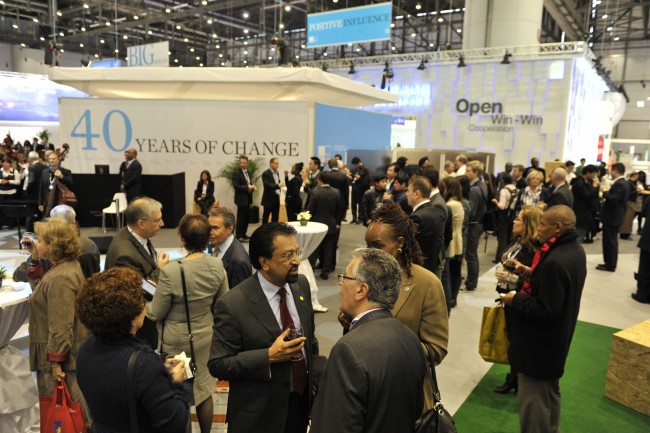 Telecom World took place in Geneva, Switzerland from 24 to 27 October 2011, an event that focused on the latest technologies, services, regulatory issues and trends in the telecommunications sector. It was also the 40thanniversary of the ITU Telecom event that started in Geneva in 1971. This year’s event was the 12thedition, having been previously held every four years. Over 300 VIPs, head of states and governments, ministers, CEOs of global corporations attended the event this year to celebrate this important milestone.