



EMEA Markets - Latest Developments
Eutelsat Communications announced the key highlights of its two-yearly survey of television reception by satellite and cable homes.
First conducted in 1994 and covering Europe, North Africa and the Middle East, the key objective of the survey is to measure the trends of three main indicators in the broadcasting market:
Last year in Paris the mood was very upbeat with collective sighs of relief that compared to the rest of the world the satellite industry had escaped the recession comparatively unscathed. This year, while still very positive, the mood was more balanced with a recognition that at least for the manufacturers the peak order rates for commercial geostationary satellites (GEOs) of the last few years are not going to be repeated as the major operators have now largely completed their replacement cycles.
The satellite industry is taking a positive step forward in supporting the maritime community through the creation of the GVF Maritime Satcom Forum. This new working group, being spearheaded by the GVF, includes the top manufacturers, network operators and service providers in the industry.
Britons who already own a high definition television set (HDTV) are more than twice as likely to buy a 3D television within the next twelve months as those who have not yet bought an HDTV, according to a survey of 700 UK consumers just completed by analyst firm Strategy Analytics. These findings challenge the commonly held assumption that people who have already bought an HDTV are not likely to upgrade to a new 3DTV set any time soon.
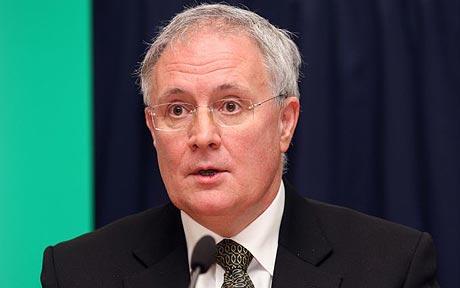 The opening plenary session of the IBC2010 conference will feature an address by Sir Michael Lyons, the chairman of the BBC Trust, on the future of public service broadcasting.
 The CASBAA Convention 2010 to be held at the Grand Hyatt Hotel in Hong Kong on October 25th – 28th will be focusing on digital content delivery. This year’s theme is “Unlock Your Networks” and it aims to connect the dots between Platforms, Channels, Technologies and Partnerships.
Despite a limited market slowdown, the fixed satellite market reached a new high in revenues last year, according to Euroconsult’s soon-to-be-released report “Satellite Communications & Broadcasting Markets Survey, Forecasts to 2019.” The fixed satellite sector grew both in terms of transponder demand (+5.3%) and revenue reaching $10.3 billion revenue in 2009. The company maintains a positive outlook for the future of the industry.
The GVF's global VSAT Certification Program, which was cited recently in the SSPI's Industry Innovator awards ceremony, is making vital inroads in the maritime satellite space.
In a previous column I noted the GVF VSAT installation training curriculum because it includes a focus on the deployment of systems used in the maritime environment, and would be included in one of the program sessions of the forthcoming GVF Broadband Maritime Europe conference in London on 28th and 29th June (www.uk-emp.co.uk/BMEu.Ldn.2010/).
The latest GVF/UK-EMP Conference Partnership event, the 3rd Annual Oil & Gas Communications Europe Conference: ‘Digital Applications & Communications Dynamics from the North Sea to the Arctic Ocean’, concluded on 13th May, with calls for the GVF-driven industry dialogue between the satellite and maritime/offshore sectors to continue to expand.
Over the last few years I have been devoting a not insignificant percentage of my work energies to activities linked to the offshore and maritime sectors – strategically important customers of satellite industry equipment vendors, service providers, and operators. If you are a regular reader of this column, you will know all about the GVF Oil & Gas Communications Europe event that is taking place in Aberdeen, Scotland, as I write; and, about the forthcoming Broadband Maritime Europe 2010 conference that will take place in London, England, 28-29 June.