


Global Markets - Latest Developments
Neo Space Group (NSG), a PIF company and Saudi Arabia’s leading commercial space services provider, announced today that the company has completed its previously announced acquisition of UP42 GmbH, the leading Earth Observation (EO) platform previously owned by Airbus Defence and Space GmbH. Following the initial announcement in December 2024, UP42 is now formally part of the NSG organization.
Media Broadcast Satellite GmbH (MBS), a service integrator and managed gateway operator, has announced an agreement with satellite operator SES to acquire a part of its media services in Germany and the UK.

The satellite sector is undergoing rapid transformation, driven by technological innovation, emerging services, and new spectrum demands. Yet, as the industry evolves, so too must the regulatory frameworks that govern it. Regulations are constantly shifting, licensing models are becoming more adaptive, and procedures increasingly open and interactive. In this environment, National Consultations have become essential forums for shaping regulation — and a strategic opportunity for operators to participate and stay ahead of the curve.

The Cloud Chamber is that school experiment where you observe the path of charged particles, like cosmic rays and electrons, through a supersaturated gas. This is a metaphor for tracking our industry situation; however, that trace only shows where the particle has been. The Cloud Chamber is like tracking in the open to see things that deviate from normal. Alternatively, what’s there and what isn’t?
The European Commission has proposed ambitious new measures to make Europe's space sector cleaner, safer and more competitive.

Having spent most of my adult life in Greater China, South Korea has always been on the periphery: a place that I know somewhat well (I have spent around 6 months in total living there and have a Korean partner), but have not had the chance to really dig into in a space industry context. Until June 2025, when I was invited to speak (on the topic of China, of course) at the International Space Summit (ISS), an event hosted by CONTEC.
Space business leaders say the UK’s Modern Industrial Strategy, “sets the stage for timely and meaningful discussion at next month’s UK Space Conference”.
The European Commission approved unconditionally the acquisition of Intelsat by SES, under the EU Merger Regulation. The Commission concluded that the transaction would not raise competition concerns in the European Economic Area (EEA). Both SES and Intelsat are global satellite network operators that own and operate geostationary Earth Orbit (GEO) satellites.
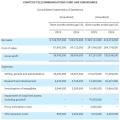
Comtech Telecommunications Corp. (NASDAQ: CMTL) today reported financial results for its third quarter ended April 30, 2025. The company reported an Operating loss of US$ 1.5 million and net loss attributable to common shareholders of US $14.5 million on Net sales of US $126.8 million

While the United States is launching rockets nearly every other day, and China maintains a steady rhythm of about one launch every five days, Europe—once a dominant force in commercial space—finds itself playing catch-up. The delayed debut of the Ariane 6 and the grounding of the Vega launcher following repeated failures have significantly eroded Europe's competitive position in orbital launch capability.