



Global Markets - Latest Developments
When EADS Astrium announced on August 1 they had purchased Vizada Networks for $960 million, the satellite world was puzzled: why would a satellite manufacturer and mostly government-focused fixed satellite service (FSS) provider buy a mobility centric-business like Vizada? With the Global Xpress contract for three Inmarsat-5 satellites going to rival Boeing, is this deal a way for EADS to get back ‘lost’ revenues? As economic conditions continue to be mediocre at best, is EADS just looking to diversify revenue streams?
U.S. Space LLC completed a $291,159 study of feasible acquisition alternatives to satisfy military satellite communications needs that was contracted by the United States Air Force Space and Missile Systems Center, Military Satellite Communications Directorate. The U.S. Space study identified and examined alternative approaches to the existing military satellite acquisition model and recommended alterations that will enable faster, more cost-effective, and more efficient solutions to meet U.S. Government needs.
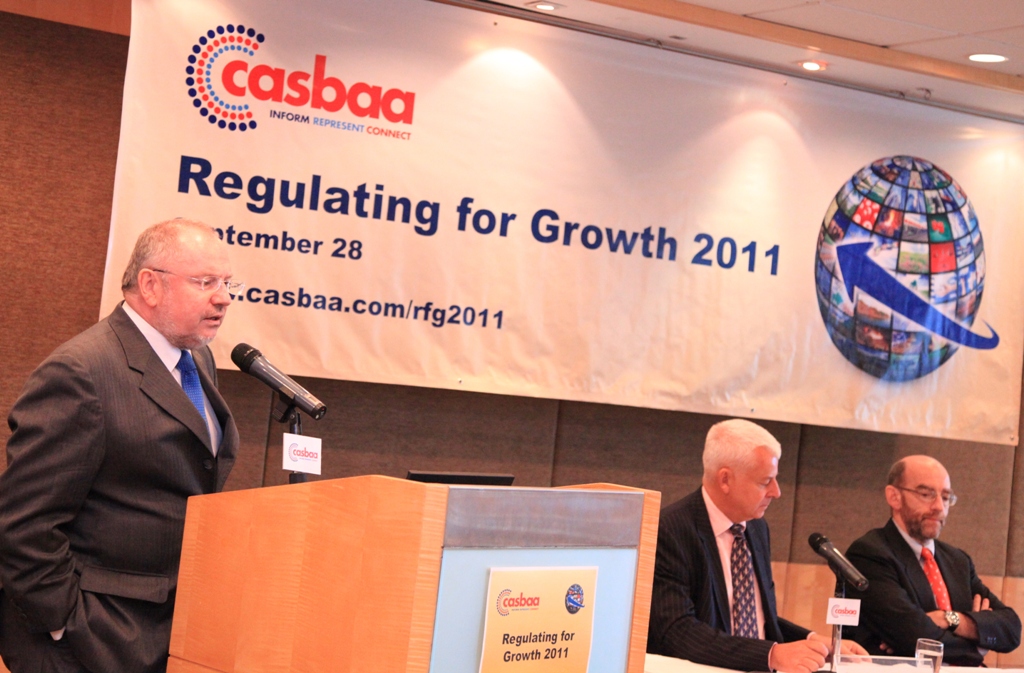 CASBAA today released its Regulating for Growth 2011 analysis and compendium of Asian pay-TV rules and regulations. Among the key findings of this third edition of the study is that even-handed market-friendly regulation results in economic stimulus, provides consumer benefit and supports creative industries.
The Broadband and IPTV Growth Report presented at the Broadband World Forum in Paris, shows that broadband continued to show healthy growth in the first half of 2011. Prepared for the Broadband Forum by industry analysts Point Topic, the figures reveal the broadband subscriber total at the end of June 2011 is now standing at 557.8 million subscriber lines, up by over 29M lines since the start of this year. The second quarter outperformed the same period last year, continuing the trend of stronger growth set in the first quarter’s results announced in June.

Although the overall mood at the Satellite Business Week conference in Paris organized by Euroconsult was not as ebullient as it has been in the last couple of years it was none the less generally positive.
Collectively, US Pay TV providers lost 400,000 subscribers in the second quarter—their single worst period in over three years. Cable TV took the brunt of the hit, though Satellite operators were not left unscathed. While much of the subscriber loss can be attributed to traditional economic churners—“deal seekers” looking for a cheaper price—the percentage of those who say they’re giving up on Pay TV altogether is not abating, according to recent research from Strategy Analytics.
IDATE has just published its “World Internet Usages & Markets” report. This report provides data and forecasts on Internet services markets – usage and revenue, by country and region – and is structured around the following key services: search engines, social networking, e-commerce, video and online advertising, both fixed and mobile. It covers Europe, North America and Asia, and analyses both the major trends in each segment and the market’s key players.
 This is not your father’s IBC. Like most industry shows, the IBC is evolving and it’s getting harder to distinguish traditionally broadcast-oriented shows like the IBC in Amsterdam and the NAB in Las Vegas with the Consumer Electronic Show (CES) and other shows dealing with content delivery and management.
While many of the HDTV markets in Western Europe are relatively mature, a trio of surveys from ABI Research suggests Germany still has plenty of room for growth. Of the 1,000 German respondents, only 38% claimed to own at least one HDTV, a penetration rate significantly lower than the data collected in France and the UK. Among these consumers, Samsung captured the highest share at 27%, with Philips following at 22% of respondents.
The latest data from analyst firm Point Topic has revealed the current affordability of broadband around the world highlights a stark contrast in broadband prices which will challenge the industry as it looks to increase global penetration. “Broadband prices can be over a thousand times higher in real terms in the poorer countries,” said Oliver Johnson, CEO at Point Topic.