

by Greg Campbell
Victor, NY, November 6, 2026--Establishing reliable connectivity in the field has never been more important - and the speed with which operators are able to connect has become the new yardstick for effective SATCOM.
Delivering uninterrupted command and control for personnel is vital in fields ranging from defense to emergency response, and ensuring this can be achieved quickly, reliably and with minimal disruption, is now the single most important issue in satellite communications.
Previously, discussions around groundbreaking SATCOM technology tended to focus on the bandwidth that could be delivered: but for operators across defense, emergency response, public safety, disaster recovery and government speed and ease of connection is now a far more important benchmark.
Operators are asking the same questions: how fast can I connect? How reliably will I stay connected? Can I move and remain connected securely? Those vital few minutes in which a connection is first established are more important than they have ever been. As a result, technology is shifting to meet the needs of operators, with new SATCOM equipment built specifically for fast connections, reliability and the ability to remain connected while moving. This is particularly important in contested environments, with electronic warfare now used to disrupt and jam connections or in austere environments where infrastructure such as cell towers may be absent. Connecting fast, and staying connected, is now the most important challenge faced by operators in fields as diverse as defense to emergency response.
A New Approach Is Needed
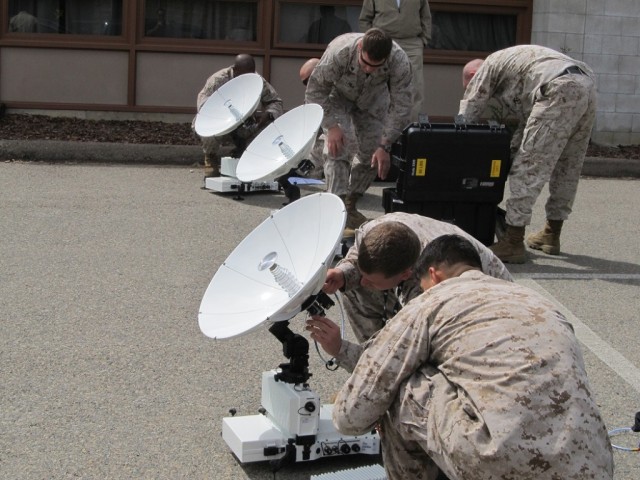
This need for rapid and reliable connections has led to a new generation of modular, lightweight and easily deployable SATCOM architectures. Today, the key concerns in designing SATCOM architecture are to balance portability and performance, to reduce size, weight and power requirements (SWaP) where possible, but also to keep systems simple and rapidly deployable. Connections need to be simple to set up and reliable even in the most difficult environments.
Delivering uninterrupted command and control is increasingly vital, so new SATCOM architectures focus on speed of deployment by ensuring tight integration across terminals and network infrastructure to boost reliability and cut complexity. This new generation of hardware sees increasing automation, with auto-acquire satellite systems, multi-band connectivity for improved flexibility, and broad compatibility with modern SATCOM architectures to ensure ease of use and rapid deployability.
A Simpler Way To Connect
Previous generations of satellite technology required high levels of technical expertise and training, which meant that fielding the technology was time-consuming and difficult. But the new generation of SATCOM architectures is designed to remove these barriers, with tool-free assembly combined with automated satellite acquisition, meaning that even non-technical personnel can establish a secure, stable connection in minutes. Rapid assembly and materials such as lightweight carbon fiber are vital to ensuring the equipment can be moved into place quickly and deployed rapidly. In order to deliver for operators in contested and extreme environments, other vital aspects are a simplified operating system so that the number of personnel who can operate devices is not unintentionally limited, and the ability to monitor the performance of SATCOM equipment via the web in real time.
A vital part of delivering connections that are fast and reliable to set up is the move away from single-orbit architectures, and towards more ambitious and modern multi-orbit approaches.
Multi-orbit approaches, which integrate Low Earth orbit (LEO) and medium Earth orbit (MEO) along with Geostationary orbit (GEO), offer operators a way to connect reliably even in highly contested environments. Multi-orbit architectures mean that operators are freed from depending on a single network to deliver (and waiting to connect) or being cut off if that network becomes unavailable. Instead, a single reliable communications architecture integrates multiple orbits, meaning operators are not left waiting too long to connect. With multi-orbit architectures offering improved flexibility and resilience, they have become a vital part of ensuring operators can connect quickly and reliably.
Connections That Save Lives
For emergency responders dealing with hurricanes, earthquakes, or wildfires where network infrastructure is compromised, it’s vital that non-technical response teams can use rapid-deployment SATCOM technology to establish connections rapidly without specialized training.
For troops in contested environments or forward operating bases, the time to set up a traditional heavy-footprint SATCOM antenna is a risk. In defense applications, today’s ground vehicles are also now increasingly connected, thanks to systems ranging from command and control to ISR (Intelligence, Surveillance, and Reconnaissance) to autonomous systems. Uptime is absolutely critical in harsh and contested environments, and as a result, the speed of deployment of SATCOM technology is becoming a competitive and strategic capability in its own right, playing a vital role in supporting critical connectivity in sectors from defense to emergency response.
A New Approach
The SATCOM industry is in a period of rapid evolution, catalyzed by the arrival of LEO satellites and multi-orbit architectures - and lengthy connection delays are no longer acceptable to operators. With technology evolving at rapid pace, the way people use SATCOM equipment is changing, with lengthy installation processes and complex set-up becoming a thing of the past. Rather than the bandwidth a SATCOM system can deliver, the most useful benchmark is the time taken to connect. A new generation of hardware addresses these needs with multi-orbit architectures, simple set-up ensuring that non-technical personnel can deploy equipment and increased automation to ensure connections can be made faster and more reliably.
-------------------------------------

Greg Campbell is President of Lite Coms, where he oversees day-to-day operations with a focus on expanding manufacturing capacity, investing in new technologies and strengthening the company’s defense SATCOM portfolio. An aerospace and defense veteran with nearly two decades of leadership experience, he previously served as President of Calspan Corporation, where he drove strategic growth across aerospace and defense programs. There, he led teams supporting global SATCOM flight testing for next-generation satellite communications, expanded optical communications testing capabilities and helped advance an autonomous flight test program. He is a recipient of the Buffalo Business First 40 Under 40 award. He can be reached at: gcampbell@litecoms.com