

by Craig Bowley
It wasn’t so long ago that GEO satellites with their fleets numbering in the tens, dominated satcom. With geostationary satellites sitting at fixed points in the sky over the duration of their 15+ years lifespan, the ground segment was built to mirror their static nature. Needless to say, operation, management and coordination of both the space and ground segment was relatively straight forward. However, the advent of LEO satellites, with their offer of low latency and global coverage, has upended the satcom industry.
With 43,000 satellites expected to be launched by 2035 [source: Novaspace], many of which will be in LEO, the industry is now facing a new world order. This rapid expansion and shift towards NGSO is driving transformation across the ground segment, with ground equipment having to evolve to cope with the complex technical needs of LEO constellations.
A Market in Expansion Mode
The appeal of LEO is easy to understand. Orbiting at an altitude of between 500 and 2,000 kilometers, the close proximity of LEO satellites to Earth (in comparison to
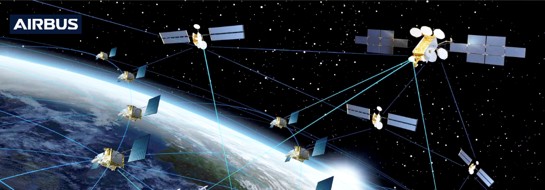
GEO satellites which operate at around 36,000 kilometers) brings a number of benefits. With characteristics including low latency and fast data transmission, LEO connectivity is ideal for a broad range of applications, from broadband connectivity to Earth observation, offshore, IoT and defense.
While market projections vary from one analyst to another, all agree that the market will continue to grow at a fast rate in the coming years. Mordor Intelligence for example, expects the global LEO satellite market to grow from USD 28.81 billion in 2025 to USD 32.59 billion in 2026, up to USD 50.96 billion in 2031, a CAGR of 9.36 from 2026-2031. Alongside SpaceX’s Starlink which dominates the market and has over 9,000 active satellite in orbit and is reportedly planning to extend to 42,000 satellites, other contenders include Eutelsat Group’s OneWeb, Amazon’s LEO, Telesat’s Lightspeed, and China Satellite Network Group’s Guo Wang constellation.
This rapid market expansion is already having a major impact on the satcom industry, introducing operational challenges, many of which are being felt on the ground.
Understanding Challenges on the Ground
The ground infrastructure needed to support LEO constellations is much more complex than was needed to support traditional GEO fleets. In this new landscape, equipment needs to be designed for the high bandwidth and low latency applications that LEO can support.
Additionally, to provide continuous coverage, LEO constellations are made of high numbers of satellites. These satellites are not only orbiting in big numbers, but because of the fact they’re travelling at high speeds in relatively close proximity to the ground (compared to GEO), they each only have a brief window to connect to an individual antenna as they pass overhead. Antennas therefore need to be able to track these fast-moving satellites and then seamlessly handover the connection to the next available satellite without any service interruption, which is in itself technically complex.
Another complication comes because the entire network is highly dynamic. High numbers of satellites are moving at fast speeds and huge networks of antennas and user terminals on the ground are all interconnected, which are also highly dynamic. All of this dynamism creates an increased risk of interference, which of course needs to be avoided because of potential performance and service issues, financial and reputational impact, etc.
To manage the technical complexities that LEO introduces and to mitigate increased risk of RFI, antennas and associated ground equipment must be high performing and able to operate with high levels of accuracy and precision. Ground equipment also needs to be much more sophisticated, enabling smart switching, auto acquire connectivity, and least cost routing.
Alongside all of this, there is also a growing need for equipment that can support users who want the flexibility of multi-orbit and multi-band networks that span across GEO, LEO, MEO and HEO. This added capability does however introduce additional complexities.
The Shift Towards Multi-orbit and Multi-band
While LEO expansion is indeed having a huge impact on the satcom industry, other orbits continue to play a vital role. LEO can’t possibly meet the needs of all users, and neither does GEO, or any other orbits for that matter. In the new order of things, it’s all about utilizing each orbit’s specific characteristics to get the most benefit. For example, GEO may be selected if a user needs to send high volumes of data where speed isn’t an issue, MEO may be better for time sensitive heavy data loads, and LEO might be tapped for high-speed and low latency connectivity.
To support the move to multi-orbit networks, equipment must be able to seamlessly switch between orbits depending on the specific needs of the user or application, or availability at a given time. Alongside having equipment that is able to leverage the specific characteristics of each orbit, there is also a growing demand for ground equipment that can operate across multiple bands. This allows networks to use different frequencies to overcome challenges such as interference, signal congestion, and regulatory issues, as well as to meet performance demands and increase data throughput, reliability and flexibility.
Satcom is breaking free from many of the limitations that up until now have held it back. However, all of this is only possible if operators and service providers have ground equipment that supports this new flexible way of working.
Agility is the Defining Factor
As the ground segment shifts to support LEO and accommodate multi-orbit, multi-band offerings, being agile and able to quickly and easily adapt in response to changing requirements is critical to success. As a result, the industry is increasingly moving away from rigid, fixed function hardware towards equipment that can be reconfigured and adapted to meet different operational needs. Traditionally, upgrading or reconfiguring ground infrastructure could involve lengthy deployment cycles and significant hardware replacement. That model is no longer sustainable. Operators instead require ground infrastructure that can be dynamically reconfigured in near real time, allowing networks to adapt quickly to changing traffic patterns, satellite availability, interference conditions and customer requirements.
With such large and complex layers at both space and ground level, orchestration is becoming increasingly important. To manage all parts of the network effectively and efficiently, orchestration needs be largely automated, enabling bandwidth to be shifted to where it’s needed, and different elements such as beam steering, spectrum management and network optimization to be coordinated as required. AI-driven orchestration and network management tools will certainly play a growing role across increasingly complex LEO, multi-orbit, multi-band environments. As LEO constellations continue to scale and multi-orbit/band architectures become the norm, the ground segment will increasingly define the commercial viability of next-generation satcom networks. While flat panel antennas will undoubtedly continue to be a key enabler for LEO, XY antennas are also growing in popularity. Mounted on an X-Y positioner rather than a traditional azimuth-elevation mount, XY antennas allows for smoother tracking of satellites across all orbits, providing high gain, and excellent link performance. This makes them particularly well suited for both LEO and multi-orbit satellite networks.
The industry is undoubtedly moving towards a future where networks and the terminals and devices that support them will have the ability to automatically and seamlessly switch between orbits, bands and satellites in order to provide the most effective and cost-efficient connectivity that best meet a user’s specific needs at any time. To succeed (and succeed it must because the hyperconverged networks of the future will rely on satellite as a key component), the industry needs highly flexible and adaptable ground infrastructure capable of adapting in real time to an increasingly dynamic space environment.
----------------------------------
Craig Bowley is the Chief Commercial Officer of Global Invacom. is responsible for driving the commercial strategy growth of Global Invacom Group. Craig has had a long career at ST Engineering iDirect where he held the position of Senior Regional Director, Government and Defence, EMEA before becoming Regional Vice President, Europe and rising to Regional Vice President, EMEA. He can be reached at: sales@globalinvacom.com