



This year's CommunicAsia in Singapore held earlier this month had a different feel to it. I've been attending CommunicAsia for nearly 15 years now and there was an air of optimism that was borne by real prospects in this growing market.
I worked in Singapore in the teleport business in the late 90as and have attended most of the CommunicAsias in the last 10 years and this particular one had a quiet confidence about it that was lacking in some of the more recent shows in the West. It wasn’t a "rah rah" type of confidence, but one borne out of a studied optimism and a sense that things are going in the right direction. After all, the Asia-Pacific region is booming, largely unaffected by the worldwide economic downturn.
This was evident in the increased attendance at CommunicAsia, mainly from foreign delegates, which saw a 15% percent rise from the previous year. Satellite companies filled Hall 6 of the sprawling Singapore Expo Center which attracted some 55,000 attendees who flocked to Singapore for the annual event which held contemporaneously the Broadcast Asia and several other IT and Telco events in one venue.
In his opening address at the CASBAA Satellite Forum held a day before CommunicAsia, Osamu Inoue, Senior EVP, Group President, Satellite Business Group of SKY Perfect JSAT Corporation stressed the importance of flexibility within the satellite communications industry: "The key to our success in the long run will rely on the ability to constantly monitor and adapt to changing market dynamics." He highlighted that the industry must move forward to develop new market segments in order to continue its success.
The major demand drivers in the Asia-Pacific region were identified during the panel sessions at the Forum as well as the Satellite Summit held during CommunicAsia. HDTV was earmarked as the key driver to push the satellite communications business forward, especially the sports content in HD. However, some broadcasters remained uncertain about the immediate returns that can be made from major investments in HD channels.Jonathan Spink, CEO of HBO Asia said: "A lot of people built capacity on the theory that we will build HD content up…. While there has not been a huge clamour for HD, we expect it will increase year by year. We will be looking to do more. It is a chicken-and-egg situation."Referring to news channels, Ian Carroll, EVP & GM of Turner Broadcasting System pointed out that the business case for HD news channels is still difficult for some broadcasters to justify: "As soon as a news story breaks, you have a trade-off between speed and quality. Speed is still the most important thing. It is a big technical challenge to get expensive equipment operational fast in places with bad power and infrastructure." Terry Bleakley, VP Commercial Operations of Measat cites Direct-to-Home (DTH) as a key driver, especially in India where there are new licenses being issued. Indonesia will also be an interesting market in the region for DTH and new channels are coming to market there. With relatively low penetration rates of Pay TV services in the developing countries of Asia, there is a huge market waiting to be tapped in in the provision of DTH services. In Indonesia, for example, of over 35 million TV households, only about two million are Pay TV households (about 5 percent). However, low Average Revenue per Unit (ARPU) plagued the DTH market in India and other developing countries in Asia. ARPUs range from US $3-6 dollars in markets such as Vietnam and the Philippines and in most countries there are a number of competing service providers that undercut each other’s price. Measat’s Bleakley acknowledges the problem of low ARPUs, but he cites the sheer size of the markets in Asia with over 3.5 Billion people might mitigate this.
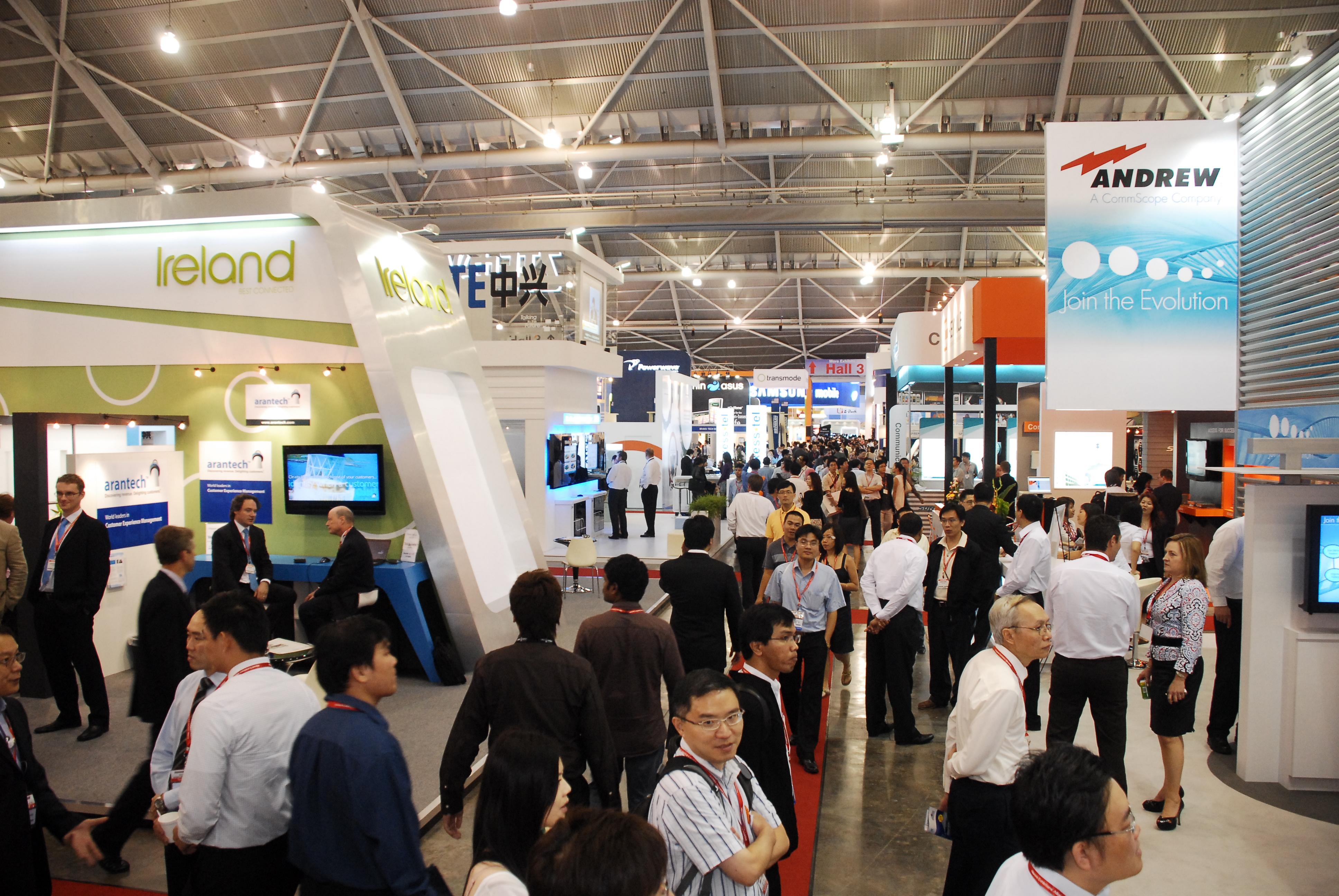
There were close to 2,000 exhibiting companies from 57 countries and regions at CommunicAsia2010 and BroadcastAsia2010. (photo: Singapore Exhibition Services)