Update on the Small Satellite Manufacturing Market
Los Angeles, Calif., August 3, 2026
by Bernardo Schneiderman
Los Angeles, Calif., August 3, 2026--This article will be addressing the market for major small satellite manufacturers and the key trends in this challenging environment where constellations are getting implemented for global and regional players both for communications, internet and earth observation among other verticals.
The global small satellite manufacturing sector is undergoing a massive shift driven by commercial mega-constellations, advanced automation, and a strategic pivot toward larger "small" satellites for increased operational utility. According to industry reports from firms like Fortune Business Insights and Mordor Intelligence, the global small satellite market is experiencing a rapid trajectory, growing from USD 5.25 billion in 2026 toward an anticipated US$ 15.17 Billion by 2031. Driven by dropping launch costs, aggressive commercial investments, and geopolitical demand, an estimated 16,900 small satellites (under 500 kg) are expected to launch over the next decade.
Over the next five years, the sector will experience major technical, commercial, and regulatory updates among the key factors that are listed below:
The Rise of Sovereign and Regional Constellations
While commercial mega-constellations like SpaceX's Starlink heavily influenced early market growth, the next five years will see a dramatic shift toward national and regional space programs.
Geopolitical Security: Countries are investing in sovereign constellations for secure data, communications resilience, and defense.
Asia-Pacific Acceleration: While North America currently leads the market, the Asia-Pacific region is the fastest-growing sector. This is heavily propelled by Chinese initiatives like the Guowang and Qianfan broadband constellations, as well as Indian Space Research Organization (ISRO) commercial smallsat expansions.
Edge Computing and Onboard Artificial Intelligence (AI)
Satellites are shifting away from being simple "data gatherers" that pass raw information down to Earth. Instead, they are becoming autonomous data centers in orbit.
Bandwidth Optimization: Integrating onboard Artificial Intelligence (AI) and machine learning allows smallsats to run edge-computing processes. Satellites can automatically filter out unneeded or cloud-covered imagery, reducing downlink bandwidth bottlenecks by over 40%.
Real-time Insights: Operators are shifting from selling raw imagery to offering Analytics-as-a-Service (AaaS) subscriptions. AI-driven data processing delivers actionable intelligence to users in logistics, agriculture, and defense within minutes of capture.
Optical Communications and Software-Defined Payloads
Hardware constraints are a major hurdle for small architectures, but advances in connectivity and adaptability are bypassing traditional physical limitations.
Laser Mesh Networks: The adoption of Optical Inter-Satellite Links (OISL) is rising. Laser communications create gigabit-per-second, high-speed mesh networks in space, vastly reducing communications latency across low Earth orbit (LEO)
In-Orbit Reconfigurability: Enabled by software-defined radios (SDR) and adaptive payloads, operators can entirely repurpose or upgrade a smallsat's functionality via code updates while it remains in orbit. This extends commercial value without requiring new hardware launches.
Stricter De-orbit Rules and Space Sustainability
As tens of thousands of new satellites enter LEO over the next five years, spectrum and orbital congestion present severe collision risks. Regulatory pressure is forcing operators to design with end-of-life disposal in mind.
The 5-Year Deorbit Mandate: Regulatory bodies like the Federal Communications Commission (FCC) require smallsats to deorbit within 5 years of ending their missions. Large constellations face disposal reliability standards as high as 99%.
Propulsion Requirements: To avoid space debris, smallsats are increasingly built with advanced electric propulsion systems or mechanical drag sails to guarantee controlled deorbiting.
Miniaturization and Shift to "Minisatellites"
Though miniature nanosatellites (like CubeSats) opened up space access, the industry is leaning heavily into minisatellites (101 to 1,200 kg) for operational tasks.
Superior Payload Capacity: Minisatellites strike a perfect balance by offering higher onboard power availability and larger physical envelopes. This is essential for deploying advanced technologies like Synthetic Aperture Radar (SAR) systems and high-resolution Earth observation cameras.
Modular Infrastructure: Manufacturers rely on flexible, power-efficient, mass-produced satellite buses. Standardizing the bus cuts production timelines and permits easy scaling from individual missions into massive global constellations.
Major Player in the USA Market for Small Satellite Manufacturers
The landscape of small satellite (smallsat) manufacturing in the United States features a mix of massive aerospace primes, prominent vertically integrated space systems providers, and highly active specialized startups. Driven by major U.S. Space Force and Space Development Agency (SDA) contracts, as well as massive commercial constellations, the market has shifted toward high-volume, standardized manufacturing.
The main small satellite manufacturers in the USA include the following key players:
Industry Leaders & Vertically Integrated Giants
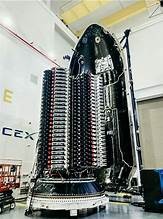
SpaceX: By far the most prolific small satellite manufacturer in history by volume. SpaceX builds thousands of its own Starlink broadband satellites internally,Spacex' Starlink satellites getting ready for launch (image courtesy of Spacex) alongside a growing number of militarized Starshield smallsats for national security customers.
Rocket Lab Corporation: Known originally for its Electron rocket, Rocket Lab has become a dominant smallsat manufacturer. They supply standard satellite buses (like the Photon line), custom spacecraft for high-profile missions like the Space Force’s VICTUS HAZE, and have expanded aggressively through vertical integration, including their massive acquisition of Iridium Communications.
Airbus U.S. Space & Defense: Operates a state-of-the-art final assembly line in Merritt Island, Florida. Born out of the joint venture that mass-produced over 600 satellites for the OneWeb constellation, they build the standardized ARROW150 and ARROW450 modular smallsat families for both commercial and government agencies. Dedicated Smallsat Pioneers & Defense Contenders
Terran Orbital: Widely recognized as one of the top commercials smallsat and CubeSat manufacturers in the country. They produce high-reliability satellite buses and have historically been a major supplier for both commercial constellation operators and defense primes.
York Space Systems: A powerhouse in turnkey satellite missions. Publicly listed on the NYSE under the ticker YSS, York is a primary contractor for the Pentagon's SDA Tracking and Transport Layers, mass-producing high-utility smallsats designed for rapid deployment.
Sierra Space: Originally a subsidiary of Sierra Nevada Corporation, Sierra Space produces highly agile smallsat platforms alongside its larger Dream Chaser spaceplane program. They are actively involved in building tranches for the military's proliferated low-Earth orbit (pLEO) constellations.
Traditional Defense Primes with Smallsat Lines
Lockheed Martin Space: While famous for large-scale legacy spacecraft, Lockheed has pivoted hard into smallsat mass production to capture the booming defense market. They maintain dedicated lines for small satellite buses used in military defense networks.
Northrop Grumman Space Systems: Utilizing the deep heritage of its acquired Orbital ATK branch, Northrop Grumman builds an array of agile, modular small satellites alongside its massive deep-space exploration platforms.
L3Harris Technologies: A massive defense contractor that has scaled up its responsive space and small satellite division, capturing vital roles building small, sensor-heavy tracking payloads and smallsat buses for national security missions.
Fast-Growing NewSpace Startups
Apex: A rapidly rising startup specializing in the mass manufacturing of standardized, scalable satellite buses (such as their Aries platform), designed to strip complexity out of custom smallsat builds.
Major Players Rest of the World
The leading small satellite (smallsat) manufacturers outside the United States represent a mix of massive defense primes and specialized "NewSpace" commercial builders.
Europe
Airbus Defence and Space (Netherlands/France/Germany): As Europe's largest satellite manufacturer, Airbus designs modular and smallsat configurations. Airbus small satellites for the German Armed Forces Notably, they are a primary manufacturing force behind the mass-produced OneWeb low-Earth orbit (LEO) constellation.
Thales Alenia Space (France/Italy): A powerhouse joint venture between Thales and Leonardo. While they build massive geostationary craft, they are also a top player in the global smallsat market, building the platforms for LEO communications and Earth observation constellations.
Surrey Satellite Technology Ltd / SSTL (United Kingdom): A wholly owned subsidiary of Airbus, SSTL pioneered the commercial small satellite industry and remains a premier builder of rapid-response, low-cost micro and mini-satellites.
OHB SE (Germany): A key European space prime specializing in small geostationary and low-Earth orbit satellites for telecommunications and Earth observation
GomSpace (Denmark): A major player globally for cubesats and nanosatellites ranging from 1 to 50 kg, serving tracking, science, and defense sectors.
EnduroSat (Bulgaria): One of the fastest-growing European NewSpace companies. They dominate the shared-satellite and nano-satellite bus market, providing pre-integrated software-defined platforms.
AAC Clyde Space (Sweden/UK): A top-tier provider specializing in advanced small spacecraft, cubesat buses, and "Space-as-a-Service" turnkey missions.
Asia-Pacific
Dhruva Space (India): A prominent full-stack space engineering company that has risen rapidly to manufacture nanosatellites (8 to 35 kg) and deployment systems.
Mitsubishi Electric Corporation (Japan): While traditionally a manufacturer of heavy spacecraft, they have deeply integrated into the smallsat component and platform assembly line to support regional constellations.
ArkEdge Space (Japan): A highly watched Japanese startup aggressively scaling up customized micro-satellite constellations for Earth observation and IoT communication.
Satrec Initiative (South Korea): Widely recognized across Asia for manufacturing high-performance, cost-effective small-to-medium satellites optimized for high-resolution Earth observation.
China Aerospace Science and Technology Corporation / CAST (China): The state-owned prime powering China's massive sovereign LEO internet and remote sensing smallsat constellations.
Americas
MDA Space (Canada): A global leader in space robotics, geo-intelligence, and satellite components. MDA expanded its smallsat footprint by acquiring Colorado-based smallsat builder Blue Canyon Technologies from RTX, leveraging international expansion to command a large global defense and commercial backlog.
In this section of the article, we highlight the primary commercial use cases for small Satellites where Agriculture, maritime logistics, and telecommunications are driving the commercialization of small satellites. By deploying low-cost constellations, operators provide real-time, global insights that were previously impossible with traditional, expensive geostationary satellites.
The primary commercial use cases reshaping global industries over the next 5 years include:
Satellite Direct-to-Device (D2D) Connectivity
The most disruptive commercial shift is the integration of satellite networks with everyday consumer cellular devices.
Standard Smartphones: Instead of requiring specialized satellite phones, standard smartphones can now connect directly to low Earth orbit (LEO) smallsats for emergency text messaging and voice calls.
Global Texting: Partnerships between satellite operators and telecom providers are expanding to deliver ubiquitous text messaging across dead zones, oceans, and remote wilderness areas.
Broadband Access: Massive constellations are expanding high-speed internet to rural, disconnected communities, bridging the digital divide globally.
High-Revisit Earth Observation and Radar Imagery
Smallsat constellations dramatically decrease the time it takes a satellite to pass over the exact same spot on Earth, transitioning imagery from static historical maps to live operations.
Hourly Revisits: By staggering dozens of smallsats in orbit, companies can snap images of critical industrial assets multiple times per day.
Synthetic Aperture Radar (SAR): Small satellites equipped with SAR technology can pierce through thick cloud cover and capture high-resolution imagery in complete darkness.
Change Detection: Automation software uses these high-frequency images to immediately spot changes on the ground, such as tracking military movements, monitoring illegal mining, or counting port cargo.
Asset Tracking and IoT Supply Chain Logistics
Global logistics companies rely heavily on smallsats to eliminate dark spots in the international supply chain.
Ocean Freight: Satellites track the locations, fuel efficiencies, and safety metrics of cargo ships across vast, open oceans.
Remote IoT Sensors: Companies deploy low-power Internet of Things (IoT) sensors to monitor heavy machinery, oil pipelines, and rail cars in deep wilderness areas.
Cold-Chain Management: Smart shipping containers transmit real-time internal temperatures to prevent the spoilage of sensitive pharmaceuticals and foods.
Precision Agriculture and Environmental Monitoring
Frequent, multi-spectral satellite imagery allows agricultural businesses to maximize crop yields and manage scarce resources.
Crop Health: Satellites detect microscopic changes in vegetation color to spot pest infestations and fertilizer deficiencies weeks before they are visible to the naked human eye.
Drought Prediction: Thermal and infrared imaging tracks exact soil moisture levels to optimize water usage and predict localized droughts.
Carbon Credit Verification: Corporations use objective satellite data to map forests and accurately verify carbon offset initiatives.
Disaster Response and Insurance Tech
The insurance and emergency management sectors utilize immediate data to mitigate financial risk and save lives during climate crises.
First Responders: Emergency crews use satellite maps within minutes of a hurricane, earthquake, or wildfire to identify safe evacuation paths and locate trapped victims.
Instant Claims: Insurance firms deploy smallsats to evaluate property damage over entire zip codes simultaneously, speeding up automated payouts to policyholders.
Wildfire Tracking: Thermal sensors on smallsats detect early-stage forest fires in remote regions, notifying local fire departments before the blazes spin out of control.
It is evident from current trends that small satellites are transforming the global satellite market not only in from the technological point of view but in terms of its applications as well.
----------------------
Bernardo Schneiderman is Contributing Editor of the Satellite Executive Briefing. He can be reached at: bernardo@satellitemarkets.com