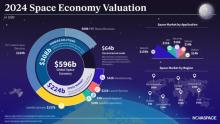
Space consulting and market intelligence firm Novaspace has released the 11th Edition of its Space Economy Report, forecasting the global space economy to grow from $596 billion in 2024 to US$ 944 billion by 2033. This steady growth, driven primarily by advancements in downstream solutions, marking a pivotal decade for the industry.
Smallsat Market Maintains Momentum Despite Starlink and Starshield Disruption, Increasingly Fueled by Government Demand
More...The latest edition of Novaspace’s ‘Prospects for the Small Satellite Market’ market intelligence report forecasts robust growth in the small satellite (smallsat) industry, projecting a market value of approximately US$ 113.3 billion over the next decade.
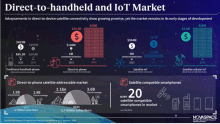
Novaspace has released the 9th edition of its report Prospects for Direct to Handheld and IoT Markets. The study projects the direct-to-device satellite connectivity market to grow from US$ 1.5 billion today to nearly US$ 15 billion by 2033, fueled by rapid advancements in technology and expanding satellite networks.
BryceTech projects near-term growth in spacecraft and heavy-lift launches open to U.S. commercial providers, driven primarily by the deployment of megaconstellations.
Near-term the average annual number of spacecraft open to launch from U.S. providers is about 3,100, with about 1,900 being non-Starlink spacecraft. Between 2029 and 2033, the average is about 2,500 spacecraft per year.
Heavy-lift launches will play a central role, with an estimated annual average of 110 launches from 2024 to 2028, decreasing to an average 50 launches annually from 2029 to 2033.
The Earth Observation (EO) Market is set for significant growth, according to the newly released 17th edition of the Earth Observation Data and Services Market report by Novaspace, a leading space consulting and market intelligence firm formed by the merger of Euroconsult and SpaceTec Partners.
A new study from Juniper Research, the foremost experts in the Internet of Things (IoT) market, has found that global IoT cybersecurity market revenue will double over the next five years; rising from US$ 27 billion in 2024.
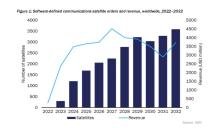
We are witnessing a major transformation driven by the integration of software-defined satellites (SDS) with virtualized, scalable, and orchestrated ground networks, where flexibility in space meets flexibility on the ground. The combination of these technologies marks a fundamental shift, enabling satellite operators to deliver services with flexibility, responsiveness, and greater efficiency. As SDS are being launched, ground network architectures are rapidly evolving to support the increased adaptability and sophistication that SDS promises, prioritizing three key elements:
The satellite ecosystem has been going through a period of tremendous change and growth overthe last few years. According to Euroconsult (now known as Novaspace), the global space economy grew over 34% in the five years to 2023 to be worth US$ 509 billion and is projected to continue growing to reach US$759 billion by 2030. A lot of this growth is attributed to “New Space,” a generic term, referring to the rapid changes taking place in the satellite ecosystem.
Parks Associates’ seventh annual Future of Video, November 19-21 at Marina del Rey Marriot, will feature the firm’s latest research on the role of the tech giants, including Roku, Samsung, and Amazon, in the video distribution and CTV (connected TV) device ecosystems.
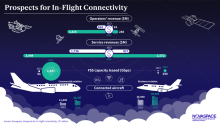
Novaspace, a merger between Euroconsult and SpaceTec Partners, one of the leading space consulting and market intelligence firm, has released its 12th annual report ‘New Prospects for In-Flight Connectivity’ which reveals continued growth in the market. It highlights key global trends, including an increase in connected aircraft, the rise of NGSO-based satellite services and the growing impact of mergers and collaborations between service providers.