



IPTV subscriptions worldwide will grow at 70% from 2012 to 2017 with 100% growth in the Asia-Pacific off a large base of 28.5 million subscribers. Global pay-TV subscribers will reach 853.5 million at the end of 2012, with 116 million IPTV subscribers accroding to ABI Research.
sponsored by


CommunicAsia2012 and BroadcastAsia2012 Offer Global Satellite Players Opportunities for Asian Expansion
More...This month will see more than 100 satellite-based communications companies – an increase of seven per cent compared to 2011 – assemble at CommunicAsia2012and BroadcastAsia2012, Asia’s largest global ICT, Digital Multimedia and Entertainment event.
Pay TV revenues in North America will peak in 2013, before gradually falling by $2.6 billion to reach $88.2 billion in 2017, according to a new report from Digital TV Research. The Digital TV North America report concludes that TV ARPU is being forced down as cable operators and telcos convert their subscribers to dual-play or triple-play bundles, though blended [overall] ARPU is rising.
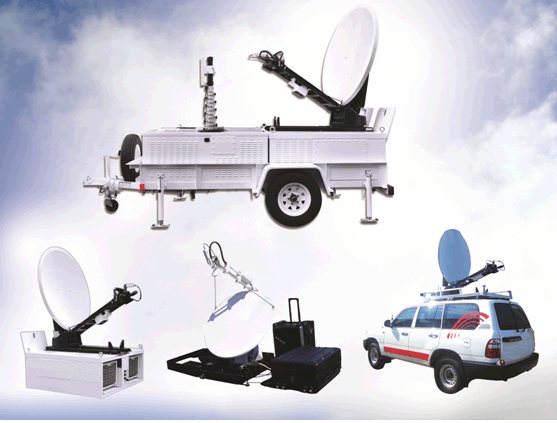 For years, AAE’s customers have requested a wide range of customized, field-deployable solutions that leverage the far-reaching capabilities of satellite. Realizing that there is not a “one-size-fits-all” solution, AAE offers customizable mobile and portable platforms that are easily transported, quickly set up, and ready for operation within minutes. Tailored to
Ericsson releases its second Traffic and Market Report - "On the Pulse of the Networked Society," revealing that by 2017, 85 percent of the world's population will have 3G coverage. According to the report, 50 percent of the world's population will be covered by 4G in 2017 and Smartphone subscriptions expected to reach 3 billion in 2017.
Driven by the continued strong demand for satellite services in the Asia Pacific region, the industry’s most important drivers -- high-definition TV conversion, DTH television and intercontinental video transmissions-- remain in high growth mode. Multi-year contracts of satellite operators are enabling the industry to maintain a dependable revenue stream despite the turmoil in other parts of the world. Transponder fill rates have remained generally high with good revenues from transponder leasing and purchase of satellite equipment by Asian countries remain buoyant.
Many fleet owners, looking to improve the lives of their crew by providing an affordable means for them to keep in touch with family and friends while onboard, turn to VSAT-based solutions to provide the connectivity. But it doesn’t need to stop there. The same VSAT system can be used to improve the bottom-line by enabling closer integration between ship and shore operations, just in the same way VSATs are used the world over to link branch offices to their headquarters. This article examines the wide variety of ship based applications proactive fleet managers are now using their satel
“Sorry We have No Crystal Ball…” That quote from Peter Ludé, Senior VP at Sony Electronics, Inc. very neatly summed up the SMPTE Forum on Emerging Technologies held in Geneva in May. However at the end of day one a show hands indicated that by an overwhelming majority even if they didn’t know what it was going to look like, the 130 delegates from 23 countries felt that the future was bright!
Seventy per cent of Earth is covered by the oceans, but, although only very few of us occupy this part of Earth’s surface except on a temporary basis, we increasingly look to the seas as a resource for industry, commerce and leisure. Thus, the comparative hostility of the seas, in contrast to our populated land masses, does not diminish their vital, and increasing, importance as a means of transport for our globalised trade goods, as an important source of food supplies and of vital energy resources, as well as an environment for our entertainment pursuits.