



Satellite-direct-to-standard-phone provider Lynk Global, Inc.and Slam Corp. (NASDAQ: SLAM), a special purpose acquisition company, today announced that they have entered into a definitive business combination agreement under which Slam will combine with Lynk. Upon completion, the combined company will operate as Lynk Global Holdings, Inc. and its common stock is expected to be publicly listed on Nasdaq under the ticker symbol “LYNK”.
Terran Orbital Corporation (NYSE: LLAP) a provider of satellite-based solutions primarily serving the aerospace and defense industries, today announced that it has entered into an agreement with the investor group comprised of Sophis Investments LLC, Sophis GP LLC, Tassos Recachinas, Roark’s Drift, LLC, Joseph Roos, Jordi Puig-Suari, Roland Coelho and Austin Williams.
TEST Summary - Comtech (NASDAQ: CMTL) announced today it received approval from the US Army Contracting Command to move forward on the Company's previously announced US$ 544 million Global Field Service Representative (GFSR) contract.
SpacePath Continues Expansion in North America with Appointment of VP for Sales and Marketing
More...
SpacePath Communications, a provider of high-performance satellite uplink amplifiers and associated equipment for the global SATCOM market,announced the appointment of Eric Schmidt as vice president for sales and marketing, North America.

A new chairman of the board of directors of the Asia Video Industry Association (AVIA) has been appointed and two new directors have joined the board.
Parks Associates: Nearly 50% of Streaming Video Industry Executives Do Not Have the Data They Need to Make Good Business Decisions
More...New Parks Associates research, conducted in partnership with SymphonyAI's media division, finds that even as streaming becomes the primary means for video consumption, 47% of executives in the streaming industry are lacking the data needed to make good business decisions. The custom research, summarized in the newly released report Streaming Content Performance: Executive Insights | 2024 State of the Market, finds consensus that data on content performance, revenue, and audience engagement is key to successful services, but current fragmentation in the market makes it difficult for companies to collect and aggregate the information needed.

Satellite connectivity direct to phone and devices is not new for companies like Iridium, Globalstar, Inmarsat that have been active in this market for the last 25-plus years but the new wave is the Low Earth Orbit (LEO) satellite constellations that are now targeting the cellular services and IOT with existing traditional companies already providing some services and new startup coming to this market.

As we’ve said for quite some time, the satellite communications market in China has historically been a pretty vanilla affair. On the Geostationary (GEO) side, the state-owned China Satcom runs an effective monopoly on the provision of satellite services, occasionally buying additional capacity from its partial subsidiary APT Satellite, and from foreign operators. On the non-GEO side, we’ve seen limited activity from state-owned China Satellite Networks Limited (China SatNet), a centrally-controlled state-owned enterprise (SOE) founded in 2021 with the purpose of deploying a “Chinese version of Starlink”.

Innovations taking place in the satellite sector continue to reshape the satellite services market. First it was HTS massively expanding the supply of bandwidth and reducing the cost per bit. Then it was LEO broadband, which made dynamic software-based management critical to connectivity.
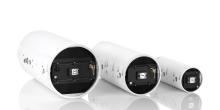
Mission Microwave Technologies, LLC, a manufacturer of highly efficient Solid State Power Amplifiers (SSPAs) and Block Upconverters (BUCs) announces that Alex Fitzgerald has joined the company as Regional Vice President of Sales for the Europe, Middle East, and Africa Region.