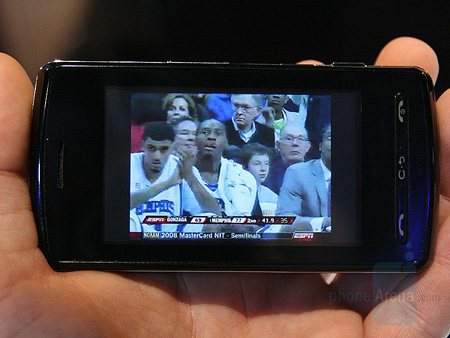
The number of homes using the internet to watch television shows and movies on the TV screen has reached more than 42 million across the US and Europe, according to the latest research from Strategy Analytics’ Connected Home Devices (CHD) service. The report, “Multiscreen Connected TV: Assessing Device Usage and Ownership,” bases its findings on a survey of 4800 respondents.

Growth continues in the IP set top box market as boxes will be used by pay-TV providers other than telco TV operators. New telco TV subscribers and replacement cycles are other growth drivers, according to a new report by Research and Markets entitled "Worldwide IP Set Top Boxes." This PowerPoint report provides five-year unit shipment, revenue, ASP, HD, HD DVR, and bill of material forecasts for IP set top boxes. Worldwide market share data for 2009 and 2010 is also included.

IP set top boxes are mostly used by telcos who offer video services over their fiber and DSL networks

The availability of wireless access to the Internet away from the home or office is not only becoming more pervasive, but consumers are actively seeking it out.  A 2009 study by Wakefield Research for the WiFi Alliance indicated that 79% of the 480 business-class passengers polled would take the availability of in-flight Internet into account when choosing an airline.  

American consumers are increasingly connected and are increasingly multitasking when it comes to multimedia.  Roughly 40 percent of tablet and smartphone owners in the U.S. used their devices daily while watching TV, while only 14 percent of eReader owners said they watched TV while using their device every day, according to a recent survey by Nielsen.

This column was nearly entitled, “In Praise of Intelsat.” But I knew people would either not read it, accusing me of being a shill for the satellite industry, or would pore over it hoping it was an ironic title, and that I would write a funny piece intended to bash the world’s largest satellite operator.

rio-2012.gifWith the sluggish mature markets of North America and Europe, the focus has been on emerging regions such as Latin America which has been experiencing a major boom in the last few years.  The demand for satellite services in Latin America is only expected to grow exponentially in the next few years with the Soccer World Cup in 2014 and the  Olympics in 2016 slated to be held

New NSR Report Forecasts EO Market to Grow to $10.5 Billion over Next Decade

NSR’s Global Satellite-Based Earth Observation, 3rd Edition, released today, indicates that last year the global Earth Observation (EO) market grew by 9% and is set to grow to $10.5 billion by 2020.  “Despite uncertainty created by the current budget crisis and financial debt of many countries, and the fact that a privately-funded EO operator recently went bankrupt, EO satellite operators have been growing their revenues lately,” said Claude Rousseau, Senior Analyst for NSR and report author.

Over the past year there has been significant growth in both the usage rates of in-flight broadband and number of planes deployed. With new providers now entering the market, growth is sure to continue in the coming year. Additionally, what has been a US-centric market began to see an expansion of borders with deployments in Europe growing over the past year and new activity in the Middle East. Research firm  In-Stat forecasts that in-flight Wi-Fi revenues will surpass the $1.5 billion mark in 2015.