The satellite sector is undergoing rapid transformation, driven by technological innovation, emerging services, and new spectrum demands. Yet, as the industry evolves, so too must the regulatory frameworks that govern it. Regulations are constantly shifting, licensing models are becoming more adaptive, and procedures increasingly open and interactive. In this environment, National Consultations have become essential forums for shaping regulation — and a strategic opportunity for operators to participate and stay ahead of the curve.

The Cloud Chamber is that school experiment where you observe the path of charged particles, like cosmic rays and electrons, through a supersaturated gas. This is a metaphor for tracking our industry situation; however, that trace only shows where the particle has been. The Cloud Chamber is like tracking in the open to see things that deviate from normal. Alternatively, what’s there and what isn’t?
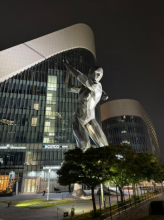
Having spent most of my adult life in Greater China, South Korea has always been on the periphery: a place that I know somewhat well (I have spent around 6 months in total living there and have a Korean partner), but have not had the chance to really dig into in a space industry context. Until June 2025, when I was invited to speak (on the topic of China, of course) at the International Space Summit (ISS), an event hosted by CONTEC.
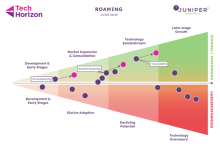
Juniper Research, identifies the three ‘Major Movers’ for roaming in 2025; ranked by their anticipated increase in market performance over the next 12 months in the launch of the Roaming Tech Horizon report.
Space & Satellite Professionals International (SSPI) has opened nominations for the 2025 Better Satellite World Awards. Every December at the Better Satellite World Awards Dinner in London, SSPI honours three organisations that have demonstrated the use of satellite to make a significant contribution to human welfare, good governance, safety, peace and security, improved education or other measures of human achievement.