



Americas Markets - Market Trends
Novaspace has released the first edition of its Satellite Communications for Defense and Security report, highlighting the dramatic transformation underway in military satcom markets globally as NGSO services become the backbone of sector growth. NGSO service revenues are positioned to see a 25%+ CAGR through the decade, reaching US$ 8.1 billion by 2034.
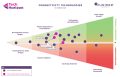
Global tech strategists Juniper Research today released its new Connectivity Tech Horizon; spotlighting the three technologies expected to have the greatest impact on the telecoms industry over the next year.
Launched today, Novaspace’s 28th edition of Satellites to Be Built and Launched reveals a decade of record-breaking orbital growth. More than 43,000 satellites are expected to launch by 2035, averaging 12 satellites and 8 tons of payload every day. This surge is set to drive a $665 Billion market in manufacturing and launch services, fueled by mega-constellations, defense demand, and rapid innovation in launch technology
A new study by global tech strategists Juniper Research has found that global satellite provider revenue from fixed satellite broadband will increase from $10 billion in 2025 to $20 billion in 2030.
Parks Associates today announced the new white paper, A Guide to Connectivity Innovations in Multifamily Housing, in partnership with Cox Communities, with new research showing that nearly one in five multifamily residents with home internet reported receiving gigabit or faster download speeds. The research explores key connectivity options available for multifamily properties, including legacy bulk and retail service, managed Wi-Fi, and the increasingly popular trend of instant activation.
inoRain, an Over the Top (OTT) solution provider, has released its new research, "Global OTT Industry Report 2025." For this report, inoRain interviewed over 300 OTT provider partners, who shared data on their end users' behavior, viewing preferences, and the streaming challenges OTT providers face today.
The GSMA today launched a new public policy paper on spectrum considerations for D2D services, providing governments with guidance for this emerging technology. D2D connects mobile handsets directly to satellites, supplementing coverage from terrestrial mobile networks and enhancing network resilience. D2D can have a positive impact if national regulations protect against harmful interference into mobile networks, which serve 5.8 billion people globally.
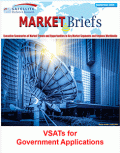
MarketBrief Report on VSATs for Government Applications sponsored by Es'hailSat
Featuring:
VSATs for Goverment Applications by Virgil Labrador
Interview with Jarod Lopez, Executive Director-Marketing and Business Development-Es’hailSat
Case Study on Private VSAT Network Expansion for Remote Connectivity
To read or download the pdf of full report click here.

The World Teleport Association (WTA) today released Cyberthreats in Your Own Backyard, a new research report that explores the ever-evolving cyberthreat environment confronting teleports and ground segment providers, the industry’s countermeasures and the impact these are having on operations.
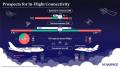
Novaspace’s latest report, the 13th edition of its Prospects for In-Flight Connectivity Report, finds NGSO services poised to revolutionize in-flight connectivity standards. NGSO’s share of commercial aviation IFC is set to skyrocket from just 1% in 2024 to 63% by 2034, driving 76% of total operator revenues by decade’s end.