



Asia-Pacific Markets - Latest Developments
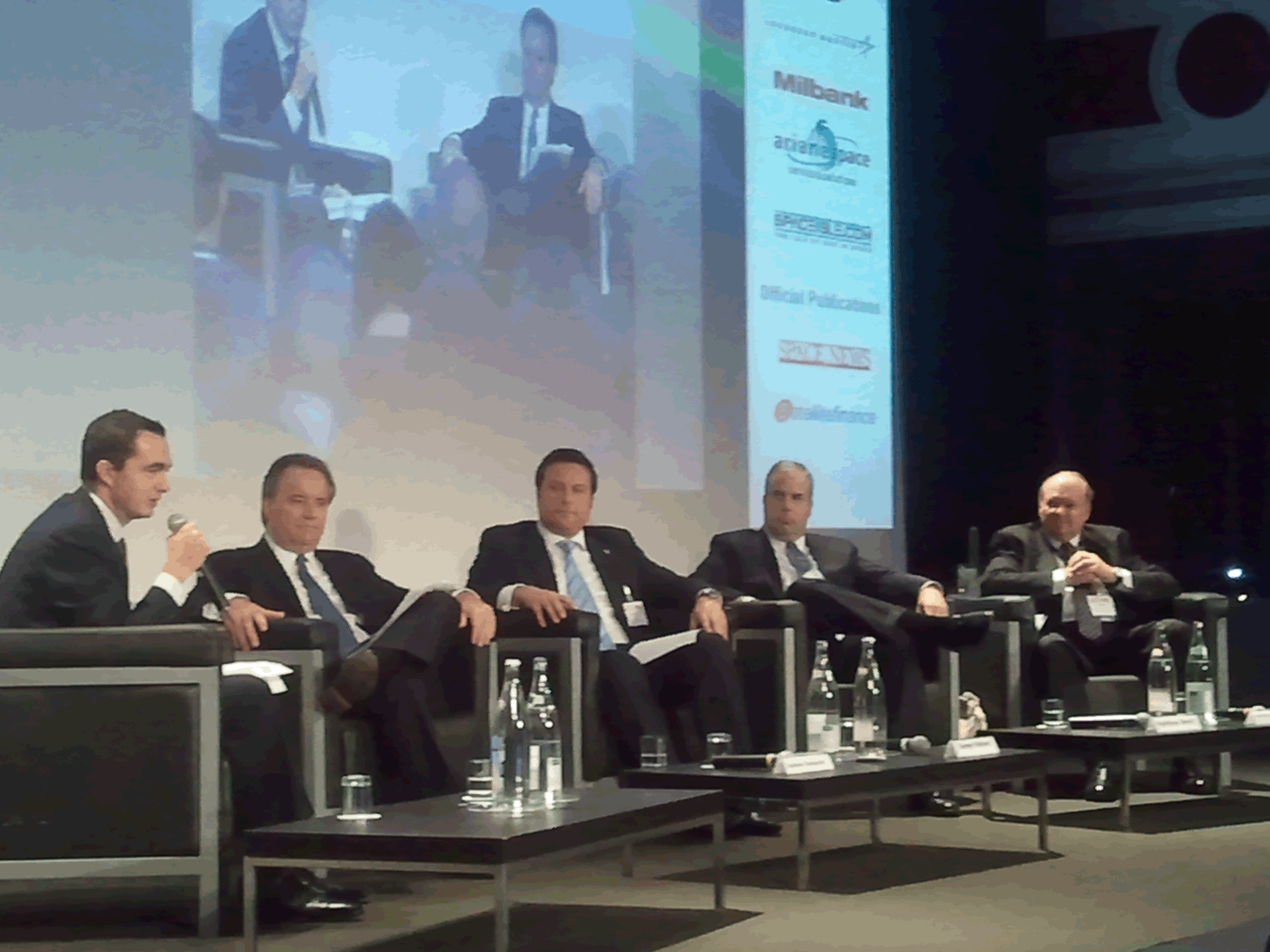
Although the overall mood at the Satellite Business Week conference in Paris organized by Euroconsult was not as ebullient as it has been in the last couple of years it was none the less generally positive.
While many of the HDTV markets in Western Europe are relatively mature, a trio of surveys from ABI Research suggests Germany still has plenty of room for growth. Of the 1,000 German respondents, only 38% claimed to own at least one HDTV, a penetration rate significantly lower than the data collected in France and the UK. Among these consumers, Samsung captured the highest share at 27%, with Philips following at 22% of respondents.
Signaling the drawing to a close of the northern hemisphere summer, two major events on the satellite industry calendar, which regularly bring together significant numbers of industry representatives to Europe in early September, will additionally feature gatherings that will focus on initiatives in which GVF, together with key industry, and other, partners, is taking the lead.
 With its theme "TV365: Watch Closely!" the CASBAA flagship annual meeting, the CASBAA Convention 2011, will be staged at the Grand Hyatt hotel, Hong Kong Oct 31-Nov 3, 2011.
Since the past two decades, the telecom sector is the fastest growing industry in China, accounting for 750 million subscribers in 2010. The burgeoning Chinese telecom sector is poised to become one of the world's largest telecommunication markets, generating tremendous employment opportunities. The industry experienced a metamorphosis with the introduction of 3G services coupled with the rising trend of MVAS platform introduced by the players, according to a new report by Research and Markets.
Russia, China, Japan and India are among the countries challenging the US in Space leadership according to the fourth annual Space Competitiveness Index Report by Futron.
Mobile subscriber growth in the Philippines is experiencing a slowdown due to the fact that the market is approaching saturation, according to the latest Research and Markerts report entitled: "Philippines Telecommunications Report Q4 2011." This report incorporates the latest figures provided by the Philippine Long Distance Telephone Company (PLDT), Globe Telecom and Digital Telecommunications Philippines (Digitel) into the forecast scenarios, with minor changes in mobile and ARPU expectations.
There was a noticeably strong presence from the satellite sector in the recently concluded CommunicAsia2011, held concurrently with BroadcastAsia 2011, with CEOs from all the major satellite operators speaking at the conferences and a record 110 satellite companies exhibiting at both shows.
More than 56,000 industry visitors, conference speakers and delegates, exhibiting staff and media from around the world attended CommunicAsia2011 and BroadcastAsia2011 between 21 – 24 June. “Each year we endeavour to evolve the content, offerings and format of CommunicAsia and BroadcastAsia, and exhibitors and visitors continue to endorse our efforts through their regular participation in the shows,” said Mr. Stephen Tan, Chief Executive of show organiser, Singapore Exhibition Services (SES).
Point Topic takes regional broadband pulse at CommunicAsia2011
In a key presentation at the CommunicAsia2011 Conference in Singapore this week, leading telecoms analyst Oliver Johnson will detail the factors that could see fixed broadband household penetration in markets such as China, the Philippines and Vietnam surge past the 50% mark by 2020. Mr Johnson, CEO of specialist broadband analysis company Point Topic, will also discuss the prospect of a single regional Asian broadband market.