



Asia-Pacific Markets - Latest Developments
With the Middle East television audience set to rise by almost 20% over the next three years*, 19 new satellites due for launch by 2013 and 90% satellite TV penetration**, there has never been a more important time to be aware of the latest broadcast technology and business practices. To address those trends and assist in realising the potential in the Middle East, CABSAT MENA, running from 8 – 10 February 2011 at Dubai International Convention and Exhibition Centre, has transformed its conference for 2011, making it more detailed and more international in its scope.
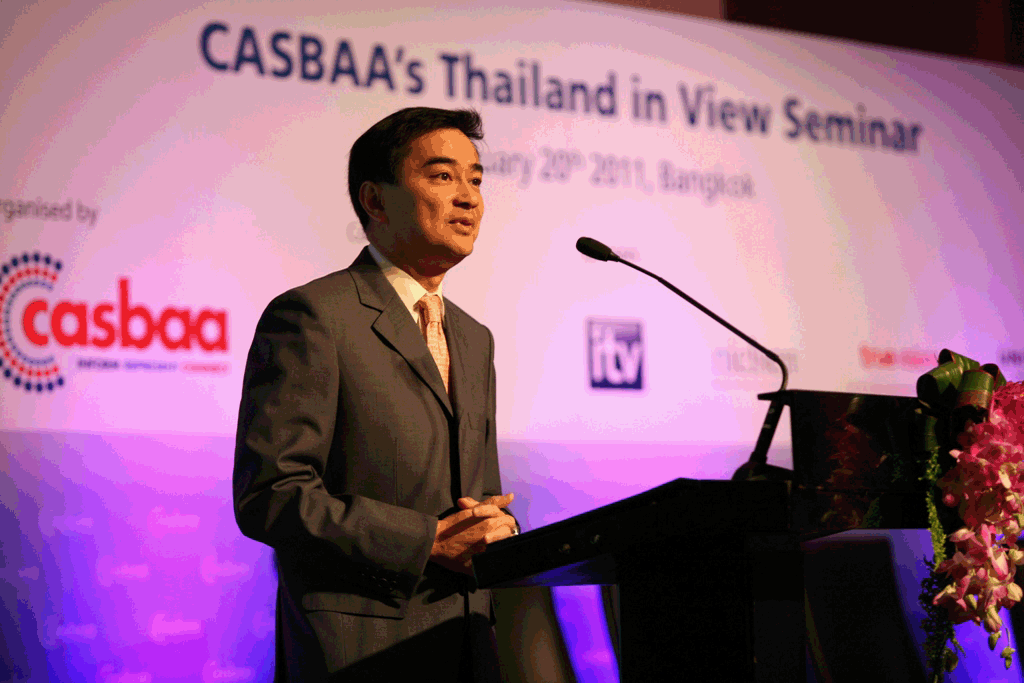 CASBAA’s Thailand in View forum, organised in association with the Satellite Television Association of Thailand, concluded on January 20, 2011 with an endorsement of the power of pay-TV by H.E. Abhisit Vejjajiva, Prime Minister of Thailand. The Prime Minister opened the conference examining the opportunities and challenges affecting the broadcasting sector by championing regulatory change to support the growth of the cable and satellite broadcast industry as a constructive and ethical medium in Thailand.
Satellite and the Middle East/North Africa Horizontal and South East Asia Vertical Markets
Readers of this column who will be attending the CABSAT MENA & Satellite MENA 2011 exhibition at Dubai International Convention & Exhibition Center (DICEC) over 8th to 10th February will be interested to know that the Editor-in-Chief of this very publication will feature in a prominent role during one of the conferences embedded within the event.
It seems like a natural progression to bring the Internet to every possible consumer electronics device available today, and the television set is no exception. Not to be left behind, many a DTH provider has provisioned Ethernet ports in the next generation of STBs, although the software and strategy to provide enhanced services may still be a few years away. As expected, North America and Western Europe are leading this market as viewers in these regions become more particular about what content they want as well as where and when they want it.
As noted in my column last month, the program for the recent GVF Oil & Gas Communications conference in Kuala Lumpur included a session entitled Cloud Computing and Future Oil & Gas Industry Networking. This was the first time the topic of the Cloud had been introduced to any of the GVF-EMP vertical market-focused series of conferences, though not the first time that a Cloud-related topic had been included in one of the GVF’s horizontal-market events – specifically the MENASAT Summit held at the time of the Satellite MENA exhibiti
2010 has been another bumper year for the satellite operators, including the European operators. This is all good news in times where many other sectors are still struggling. However, there is a risk that good times breed complacency.
Satellite Markets and Research are media partners for the following events where we will be participating as either exhibitors, speakers or session moderators. To book a meeting with Satellite Markets and Research in any of the shows below, e-mail: virgil@satellitemarkets.com
 The opportunities for satellite communications in Africa has never been greater. We saw a glimpse of this in June this year during the World Cup finals held in South Africa. The successful holding of the World Cup in South Africa demonstrated to the world that Africa is coming of age in the world’s stage.
China’s web TV market kicked off in 2009, with over 2 million web TV set shipments and about 1/4 million web TV set top box (STB) shipments. The fast development of the web TV market is driven by competition between the giant domestic TV vendors and the low incremental cost for web TV functionality, helping drive wider user acceptance, according to In-Stat.
The World Teleport Association (WTA) announced its rankings of the Top Teleport Operators of 2010, providing a unique look into the diverse teleport sector of the global communications industry. Rankings are reported in three categories: the Independent Top Twenty, the Global Top Twenty, and the Fast Twenty.
The Independent Top Twenty