



Asia-Pacific - Market Trends

by Bernardo Schneiderman
This article will be addressing the market for major small satellite manufacturers and the key trends in this challenging environment where constellations are getting implemented for global and regional players both for communications, internet and earth observation among other verticals.
The maritime satellite communications market is entering a new phase of growth as next-generation satellite networks transform connectivity at sea. According to Novaspace’s newly released Maritime Satellite Communications, 14th Edition, global maritime satellite service revenues are projected to grow from US$ 2.28 billion in 2025 to US$ 3.79 billion by 2035, driven by accelerating adoption of NGSO (Non-Geostationary Satellite Orbit) services and increasing demand for always-on connectivity across commercial and recreational fleets.

by Jason Bates
Low Earth Orbit (LEO) broadband is reshaping the market—but it’s just one of several major shifts underway, alongside software-defined satellites, 5G non-terrestrial networks (NTN), optical communications, and direct-to-device (D2D). As these trends move from concept to deployment at varying speeds, which will have the greatest impact on teleport operators managing shared, multi-orbit infrastructure?
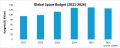
Global government space spending grew from approximately US$94.4 billion in 2021 to US$125.9 billion in 2026, representing more than US$688 billion in cumulative expenditure over six years, according to a new study by SatNxt. The Global Government Space Budget & Spending Analysis Report (2021–2026) provides a comprehensive assessment of how civil and defense space budgets are evolving across the world's leading and emerging space nations.
The Asia Video Industry Association’s Coalition Against Piracy (CAP), in partnership with YouGov, today released the findings of its 2026 consumer survey examining video piracy across eight Asia-Pacific markets. The survey found that 44% of consumers continue to access pirated content, down from 46% in 2025. Singapore leads the way with the lowest incidence of piracy at 25%, down from 38% in 2025. Piracy rates however remain particularly prevalent in Vietnam (56%), Indonesia (51%), Malaysia (49%) and the Philippines (48%).
Markets and Markets released a new report "Solid-state LiDAR Market By Type (MEMS-Based Scanning, Optical Phased Arrays, Flash LiDAR), End-Use Application (Corridor Mapping, Engineering, Environment, ADAS & Driverless Cars, Exploration, Urban Planning), and Region - Global Forecast to 2030." The LiDAR market is projected to be valued at US$ 3.2 billion by 2030 from US$ 0.50 billion in 2025, growing at a CAGR of 45.0% during the forecast period.
Novaspace’s latest In-Flight Connectivity report points to sustained, long-term growth in the In-Flight Connectivity (IFC) market, with connected aircraft numbers to exceed 70,000 by 2035. Simultaneously, IFC penetration is expected to rise from 48% to 72% in commercial aviation and from 67% to 88% in business aviation.
Very Small Aperture Terminals or VSATs for short, have been widely adopted for network and connectivity applications globally by virtually every major industry including retail, enterprises, banks, financial institutions, transportation, logistics, utilities, mining, oil & gas and government agencies and the military, among others. If you have ever used an ATM at a bank or paid at a pump at a gas station, your transaction most likely went through a VSAT network. According to most estimates, there are currently over 5 million VSAT terminals deployed worldwide and the number of terminals are forecasted to more than double in the next decade.
Consumers using pirate streaming services across Asia-Pacific are exposing themselves to serious cybersecurity, privacy and financial risks, according to a new study released today by the Coalition Against Piracy (CAP), an initiative of the Asia Video Industry Association (AVIA).
India's space startup ecosystem has entered its first true execution and commercialization phase, according to the latest assessment by SatNxt. The Indian Space Startup Ecosystem Report 2026 provides a data-led, bottom-up assessment of 230+ active Indian space startups, evaluating technology maturity, execution readiness, capital allocation, business models, and value chain positioning across the full private space sector.